When a blast wave rips through a building, the difference between catastrophic failure and structural survival often comes down to what’s layered onto the walls. Over the last two decades, engineers and military planners have turned to an unlikely pairing — spray polyurethane foam bonded with polyurea elastomer coatings — as one of the most effective retrofit solutions for blast mitigation on the market today. If you’ve ever worked with closed-cell spray foam on an insulation job, you already understand the material’s rigidity and adhesion. Now imagine that same chemistry, fine-tuned and combined with a flexible, impact-absorbing polyurea shell, engineered to keep concrete and masonry from turning into deadly projectiles during an explosion.
This guide breaks down exactly how spray foam and polyurea work together for blast protection, why the combination outperforms traditional reinforcement methods, and where the technology is headed in both military and civilian applications. Whether you’re a contractor exploring a new revenue stream, a facility manager responsible for force protection, or simply someone who wants to understand the science behind blast-resistant coatings, you’ll find actionable information throughout this article.
What Is Foam Blast Mitigation?
Foam blast mitigation refers to the use of polymer-based foam systems — most commonly spray-applied polyurethane foam — to absorb and dissipate energy from explosive blasts. The concept isn’t new. Military research dating back to the early 2000s demonstrated that rigid polyurethane foams could reduce fragmentation of concrete masonry unit (CMU) walls by as much as 80 percent when applied to the interior face of a structure. The foam doesn’t stop the blast wave itself. Instead, it holds the wall together after the shock front passes through, preventing the wall from shattering into high-velocity debris that causes the majority of blast-related casualties.
Think of it this way: an unreinforced concrete block wall hit by a significant overpressure event will fracture into hundreds of fragments, each one moving fast enough to cause serious injury or death. That same wall, coated on the back side with two to three inches of closed-cell spray foam and a layer of polyurea, will crack and deform — but the fragments stay bonded to the foam membrane. The wall bends rather than breaks apart. That single difference saves lives.
Understanding the Science: How Spray Foam and Polyurea Absorb Blast Energy
To understand why this combination works so well, you need to look at what each material brings to the table individually, and then how they complement each other in a layered system.
Spray Polyurethane Foam (SPF) in Blast Applications
Closed-cell spray polyurethane foam, the same material used in residential and commercial insulation, has a cellular structure that makes it surprisingly effective at energy absorption. Each tiny cell acts like a miniature shock absorber. When a blast wave compresses the foam, those cells crush progressively, converting kinetic energy into heat through plastic deformation. The foam’s rigid structure also bonds tenaciously to substrates like concrete, CMU, brick, and steel, creating a composite system where the foam effectively becomes part of the wall itself.
In blast mitigation applications, the foam is typically sprayed at densities between 2.0 and 3.0 pounds per cubic foot — slightly denser than standard insulation foam. The higher density provides greater energy absorption capacity. Application thickness generally ranges from 2 inches to 4 inches depending on the threat level being designed for, though some military specifications call for even thicker applications on high-value targets.
Polyurea Elastomer Coatings for Blast Protection
Polyurea is a type of elastomer formed by the reaction of an isocyanate component with a resin blend containing amine-terminated compounds. What makes polyurea extraordinary for blast mitigation is its combination of extreme elongation, high tensile strength, and rapid cure time. A quality blast-rated polyurea coating can stretch over 400 percent before failing, which means it can accommodate massive deformation without tearing. When sprayed over foam that’s bonded to a masonry wall, the polyurea acts as a flexible membrane that catches and contains wall fragments even after the foam and substrate have fractured.
The gel time for most spray-applied polyurea systems is between 2 and 8 seconds, with full functional cure achieved in under a minute. This fast reactivity allows applicators to build up thickness quickly — typically 60 to 250 mils per coat — and return the structure to service rapidly. For military installations operating in hostile environments, that speed is a genuine tactical advantage.
The Synergy: Why the Combination Outperforms Either Material Alone
Neither spray foam nor polyurea alone provides optimal blast protection. Used independently, rigid foam can absorb energy but tends to fracture and separate from the wall at higher blast pressures. Polyurea alone can contain fragments, but without the energy-absorbing foam layer beneath it, the coating must bear the full brunt of the blast load, which can cause it to tear or delaminate. Together, they form a system where the foam absorbs the initial energy pulse and the polyurea contains the resulting debris field. Research conducted at the Air Force Research Laboratory and various university test facilities has consistently shown that foam-plus-polyurea systems outperform either component used in isolation by significant margins.
Real-World Applications of Foam Blast Mitigation Systems
Spray foam and polyurea blast mitigation technology has moved well beyond the laboratory. Here’s where these systems are actively deployed and making a measurable difference in protecting lives and infrastructure.
Military Installations and Forward Operating Bases
The United States military was among the earliest adopters of spray-applied blast mitigation coatings. Existing CMU structures on bases both stateside and overseas were retrofitted with interior foam and polyurea systems to protect personnel from improvised explosive device (IED) attacks and mortar fire. The appeal for military applications is straightforward: retrofitting an existing building with spray foam and polyurea is dramatically faster and less expensive than demolishing the structure and rebuilding with reinforced concrete or steel. A crew of two or three applicators can coat the interior walls of a standard barracks building in a matter of days.
Government Buildings and Embassies
After the 1998 embassy bombings in East Africa and subsequent attacks on government facilities worldwide, the U.S. State Department and General Services Administration began specifying blast mitigation retrofits for vulnerable structures. Foam and polyurea systems are now part of the standard toolkit for hardening existing buildings that don’t meet current Unified Facilities Criteria (UFC) blast resistance standards. The systems are particularly valuable for structures where adding external reinforcement would be architecturally or diplomatically impractical.
Critical Infrastructure and Industrial Facilities
Petrochemical plants, ammunition storage facilities, power generation stations, and transportation hubs all face potential blast hazards — whether from accidental explosions or deliberate attacks. Foam blast mitigation coatings provide a practical way to harden these facilities without the massive construction costs associated with traditional blast-resistant design. The coatings can be applied to existing walls, ceilings, and even equipment enclosures, providing layered protection that reduces both structural damage and the generation of secondary fragments.
Commercial and Civilian Structures
While blast mitigation is most commonly associated with military and government projects, the commercial market is growing. Schools, hospitals, data centers, and high-profile corporate headquarters are increasingly specifying blast-resistant construction. For existing buildings being upgraded, spray foam and polyurea offer a retrofit solution that avoids the disruption of traditional construction methods. The systems can often be installed during off-hours with minimal impact on building operations.
Comparing Foam Blast Mitigation to Traditional Blast Protection Methods
Spray foam and polyurea systems don’t exist in a vacuum. They compete with and complement several established approaches to blast-resistant design. Understanding where foam-based systems excel — and where they have limitations — helps specifiers make informed decisions.
Steel reinforcement and blast-resistant concrete construction remain the gold standard for new-build applications where maximum protection is required. Purpose-built blast walls using reinforced concrete can withstand enormous overpressures. The trade-off is cost, construction time, and weight. Retrofitting an existing building with steel plates or reinforced concrete is often prohibitively expensive and may require structural modifications to support the additional load. Foam and polyurea systems add minimal weight to the structure — typically less than 3 pounds per square foot — making them suitable for buildings with limited structural reserve capacity.
Blast-resistant curtain wall systems and laminated glass are effective for window and façade protection, but they don’t address the vulnerability of solid wall sections. Foam blast mitigation fills that gap, particularly for masonry construction, which remains the most common wall type in both military and civilian buildings worldwide. Fiber-reinforced polymer (FRP) wraps provide another retrofit option, but they’re generally more labor-intensive to install and less effective at energy absorption than foam systems of comparable thickness.
How Spray Foam and Polyurea Blast Mitigation Systems Are Installed
Installation follows a systematic process that experienced spray foam contractors will find familiar, though blast mitigation work carries additional requirements related to quality control, thickness verification, and adhesion testing.
Surface Preparation
The substrate must be clean, dry, and free of contaminants that could interfere with adhesion. For CMU and concrete walls, this typically means removing loose paint, efflorescence, and surface dust. Oil, grease, and form release agents must be eliminated. In renovation projects, existing finishes like drywall, plaster, or paneling are removed to expose the structural wall surface. Adhesion is the foundation of the entire system’s performance — if the foam separates from the wall during a blast event, the system fails. Most specifications require adhesion pull testing at defined intervals to verify bond strength.
Foam Application
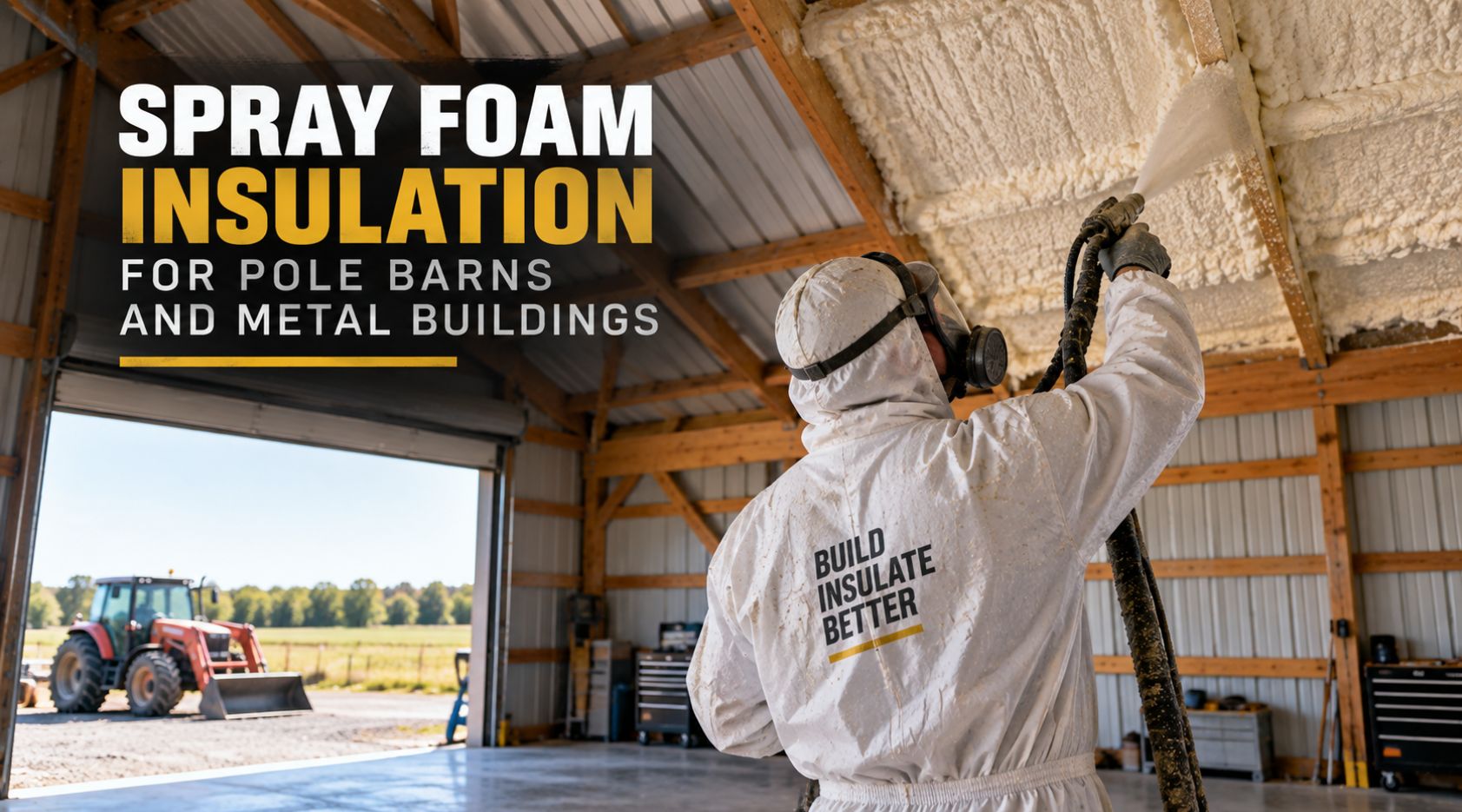
Closed-cell spray polyurethane foam is applied directly to the prepared wall surface using standard plural-component spray equipment. The foam is built up in passes to the specified thickness, which is verified using thickness gauges at a grid pattern defined in the project specification. Temperature and humidity conditions during application must be controlled within the foam manufacturer’s recommended range, just as with insulation work. For blast-rated systems, the foam formulation may be specifically engineered for higher density and energy absorption, so using a manufacturer-approved blast-rated product is essential.
Polyurea Application
After the foam has cured, the polyurea elastomer is spray-applied over the foam surface. Most blast mitigation specifications call for polyurea thickness between 100 and 250 mils, applied in multiple passes. The polyurea bonds to the foam substrate, creating a continuous flexible membrane across the entire coated surface. At wall terminations, floor lines, and ceiling junctions, the polyurea is typically extended and anchored using mechanical fasteners — steel angles or channels bolted through the polyurea membrane into the structural frame. These anchorage details are critical because they prevent the entire foam and polyurea assembly from peeling away from the wall during a blast event.
Quality Control and Testing
Blast mitigation work demands rigorous quality control that goes beyond standard spray foam practice. Thickness measurements, adhesion tests, and material property verification are documented throughout the installation. Many projects require that the applicator hold specific certifications from the coating manufacturer, and some government contracts mandate third-party inspection during application. The completed system may be subject to destructive testing of witness panels or coupons sprayed simultaneously with the production work.
Key Performance Standards and Specifications for Blast Mitigation Coatings
The blast mitigation industry operates within a framework of testing standards and design criteria that contractors and specifiers need to understand. The Unified Facilities Criteria (UFC) documents published by the Department of Defense provide the primary design guidance for military and government projects. UFC 3-340-02, “Structures to Resist the Effects of Accidental Explosions,” and UFC 4-010-01, “DoD Minimum Antiterrorism Standards for Buildings,” are the foundational references. ASTM International has also developed testing standards relevant to blast mitigation coatings, including methods for measuring elongation, tensile strength, adhesion, and impact resistance of applied coating systems.
Products used in blast mitigation applications are typically validated through shock tube testing or open-arena blast testing at accredited facilities. These tests subject coated wall assemblies to defined blast pressures and impulse loads, then evaluate the wall’s response based on criteria like maximum deflection, fragment containment, and post-blast residual capacity. Manufacturers of blast-rated foam and polyurea systems should be able to provide test reports demonstrating their products’ performance against specific threat levels.
Choosing the Right Materials for Blast Mitigation Projects
Not all spray foams and polyureas are created equal, and using the wrong product in a blast application could have serious consequences. Here’s what to look for when specifying or sourcing materials for a blast mitigation project.
For the foam component, you want a closed-cell spray polyurethane foam that’s been specifically formulated and tested for blast applications. Standard insulation-grade foam may not provide adequate density, adhesion, or energy absorption characteristics. Look for products with published blast test data from recognized testing facilities, documented adhesion values to common substrates, and density in the 2.0 to 3.5 pcf range for typical applications.
For the polyurea component, key performance properties include elongation at break (minimum 300 percent, preferably over 400 percent), tensile strength (minimum 2,500 psi), tear resistance, and adhesion to the underlying foam. The polyurea should be a pure or hybrid polyurea system — not a polyurethane marketed as polyurea. The distinction matters because true polyurea systems offer faster cure times, better moisture tolerance during application, and superior long-term performance characteristics compared to polyurethane coatings. Reputable manufacturers will provide full technical data sheets, application guides, and blast test documentation for their systems.
Cost Considerations for Foam Blast Mitigation Retrofits
Pricing for blast mitigation work varies significantly based on project size, threat level, substrate condition, and geographic location. As a general frame of reference, installed costs for a spray foam plus polyurea blast mitigation system typically range from $15 to $40 per square foot, depending on the specified foam thickness and polyurea mil build. That’s a broad range, and projects at the higher end usually involve premium military specifications, remote locations, or complex substrates that require extensive preparation.
Compare that to the cost of reinforced concrete blast walls at $80 to $200 or more per square foot, or steel blast panels at $50 to $150 per square foot, and the value proposition of foam-based retrofit systems becomes clear. The installed cost advantage is amplified by the speed of application — a spray foam and polyurea system can be installed in a fraction of the time required for traditional blast-resistant construction, reducing labor costs and minimizing facility downtime.
The Business Opportunity for Spray Foam Contractors
For established spray foam contractors, blast mitigation represents a high-value specialization that leverages existing equipment and skills. The core application technique — plural-component spray application of polyurethane foam — is the same process used every day on insulation jobs. The differences lie in the material specifications, quality control requirements, and the addition of the polyurea topcoat, which requires a separate but similar spray setup.
Contractors looking to enter this market should invest in training from a manufacturer that produces blast-rated systems, familiarize themselves with the relevant UFC and ASTM standards, and understand the additional quality control documentation required on blast mitigation projects. The barriers to entry are moderate — you need the right equipment, the right materials, and the right knowledge — but the margins are significantly higher than standard insulation work, and the projects tend to be larger in scope.
Future Trends in Foam Blast Mitigation Technology
The field of blast mitigation continues to evolve as researchers develop new materials and engineers find novel applications for existing technology. Several trends are worth watching for anyone involved in this space.
Multi-layer composite systems that combine foam, polyurea, and fiber reinforcement are showing promise in testing, offering even greater energy absorption and fragment retention than two-component systems. Manufacturers are developing foam formulations with tailored energy absorption profiles — graded-density foams that optimize performance across a wider range of blast pressures. On the polyurea side, new chemistries are pushing elongation values beyond 600 percent while maintaining tensile strength, expanding the performance envelope of spray-applied blast coatings.
The civilian market for blast protection is expanding as building codes and security standards evolve. Events in recent years have driven increased awareness of blast hazards in public spaces, leading more architects and building owners to specify blast mitigation measures in new construction and renovation projects. As this market grows, demand for qualified applicators will grow with it, creating opportunities for spray foam contractors who position themselves early in this specialized field.
Frequently Asked Questions About Foam Blast Mitigation
How thick does the spray foam need to be for effective blast protection?
The required foam thickness depends on the design blast threat level, the type of wall construction being protected, and the performance criteria specified in the project documents. For typical anti-terrorism applications on CMU walls, specifications commonly call for 2 to 4 inches of closed-cell spray foam. Higher threat levels or weaker substrates may require greater thicknesses. The foam thickness should always be determined through engineering analysis based on the specific threat and construction type, not selected arbitrarily.
Can standard spray foam insulation be used for blast mitigation?
No. While the application method is similar, blast mitigation requires foam products that have been specifically formulated and tested for blast loads. Standard insulation-grade spray foam may not have the density, adhesion strength, or energy absorption characteristics needed to perform under blast conditions. Always use a product that comes with published blast test data from a recognized testing facility and is approved by the system manufacturer for blast applications.
What is the lifespan of a foam and polyurea blast mitigation system?
When properly installed and protected from direct UV exposure (which is the case for interior applications), foam and polyurea blast mitigation systems have an expected service life of 20 years or more. Polyurea is inherently resistant to moisture, chemicals, and biological degradation. Interior applications that are shielded from physical damage and sunlight can remain functional for the life of the building with minimal maintenance.
Does the blast mitigation coating also provide insulation benefits?
Yes. The closed-cell spray foam component provides thermal insulation with R-values comparable to standard insulation foam — typically R-6 to R-7 per inch. This dual-purpose functionality is a significant advantage in retrofit applications, where the blast mitigation system simultaneously improves the building’s energy performance. On military installations and government buildings, the energy savings can help offset the cost of the blast protection upgrade over time.
Is polyurea the same as polyurethane for blast protection?
No, and the distinction is important. Polyurea and polyurethane are both polymer coatings, but they have different chemical structures and performance characteristics. Pure polyurea systems cure faster, tolerate moisture better during application, and generally achieve higher elongation and tensile strength than polyurethane coatings. For blast mitigation, polyurea’s superior elongation and impact resistance make it the preferred choice. Some manufacturers offer hybrid polyurea-polyurethane systems that balance performance and cost, but pure polyurea remains the benchmark for critical blast protection applications.
Final Thoughts on Spray Foam and Polyurea Blast Mitigation
Blast mitigation using spray foam and polyurea represents one of the most practical and cost-effective approaches to protecting buildings and their occupants from explosive threats. The technology has been proven through extensive military testing and real-world deployment, and its application is expanding into civilian markets as awareness of blast hazards grows. For spray foam contractors, the crossover into blast mitigation work is a natural progression that leverages existing skills and equipment while opening the door to higher-margin, specialized projects. For building owners and facility managers, foam blast mitigation coatings offer a retrofit solution that can dramatically improve a structure’s blast resistance without the cost, weight, and disruption of traditional blast-resistant construction. As threat landscapes evolve and security requirements tighten, the demand for qualified blast mitigation applicators and well-engineered foam and polyurea protection systems will only continue to grow.
Free · No obligation
Get spray foam quotes from a local pro
Tell us what you want insulated and where. We’ll connect you with a qualified spray foam contractor near you.

Diana Mills is the founder and editor of Foam Insulation Review. With over 15 years of experience in the building materials and spray foam industry, she has tested hundreds of products, interviewed leading contractors, and published in-depth guides for homeowners and professionals alike. Diana is passionate about helping people make smarter insulation decisions.