We’ve compiled answers to the most common questions we receive from homeowners, contractors, and industry professionals about spray foam insulation. Browse by category below or use Ctrl+F to search for your question. For questions not covered here, visit our Community Forum or contact our team.
Costs & ROI
How much does spray foam insulation cost per square foot?
Spray foam costs typically range from $1.20 to $4.00 per square foot installed, depending on foam type, thickness, application, and region. Open-cell foam in walls runs $1.20–$2.00/sq ft; closed-cell foam in walls runs $2.50–$4.00/sq ft. Rim joist and crawlspace applications tend to run higher per square foot due to access difficulty. For detailed 2026 pricing, see our complete cost guide.
Is spray foam insulation worth the extra cost over fiberglass?
In most cases, yes — but it depends on your specific situation. Spray foam provides superior air sealing, higher R-value per inch, moisture control, and lasts indefinitely without settling. The payback period for spray foam in most applications is 3-8 years, with lifetime energy savings of $15,000–$40,000 for a typical U.S. home. See our detailed spray foam vs. fiberglass comparison for help making this decision.
R-Value & Performance
What is the R-value of spray foam insulation?
Open-cell spray foam achieves R-3.7 to R-3.9 per inch. Closed-cell spray foam (2 lb. density) achieves R-6.5 to R-7.0 per inch — the highest R-value of any field-applied insulation material. For full details on how R-value works and what you need for your climate zone, see our complete R-value guide.
Does spray foam R-value degrade over time?
Open-cell foam: no. Closed-cell foam: there is a small initial aging process in the first 6-12 months as some blowing agent gas diffuses out and is replaced by air. This reduces R-value by approximately 5-8% from the initial installed value. The R-value then remains stable for the life of the building. Manufacturers account for this in their long-term R-value ratings. Unlike fiberglass or cellulose, spray foam does not settle, compress, or absorb moisture in ways that further degrade performance.
Open Cell vs. Closed Cell
What’s the difference between open cell and closed cell spray foam?
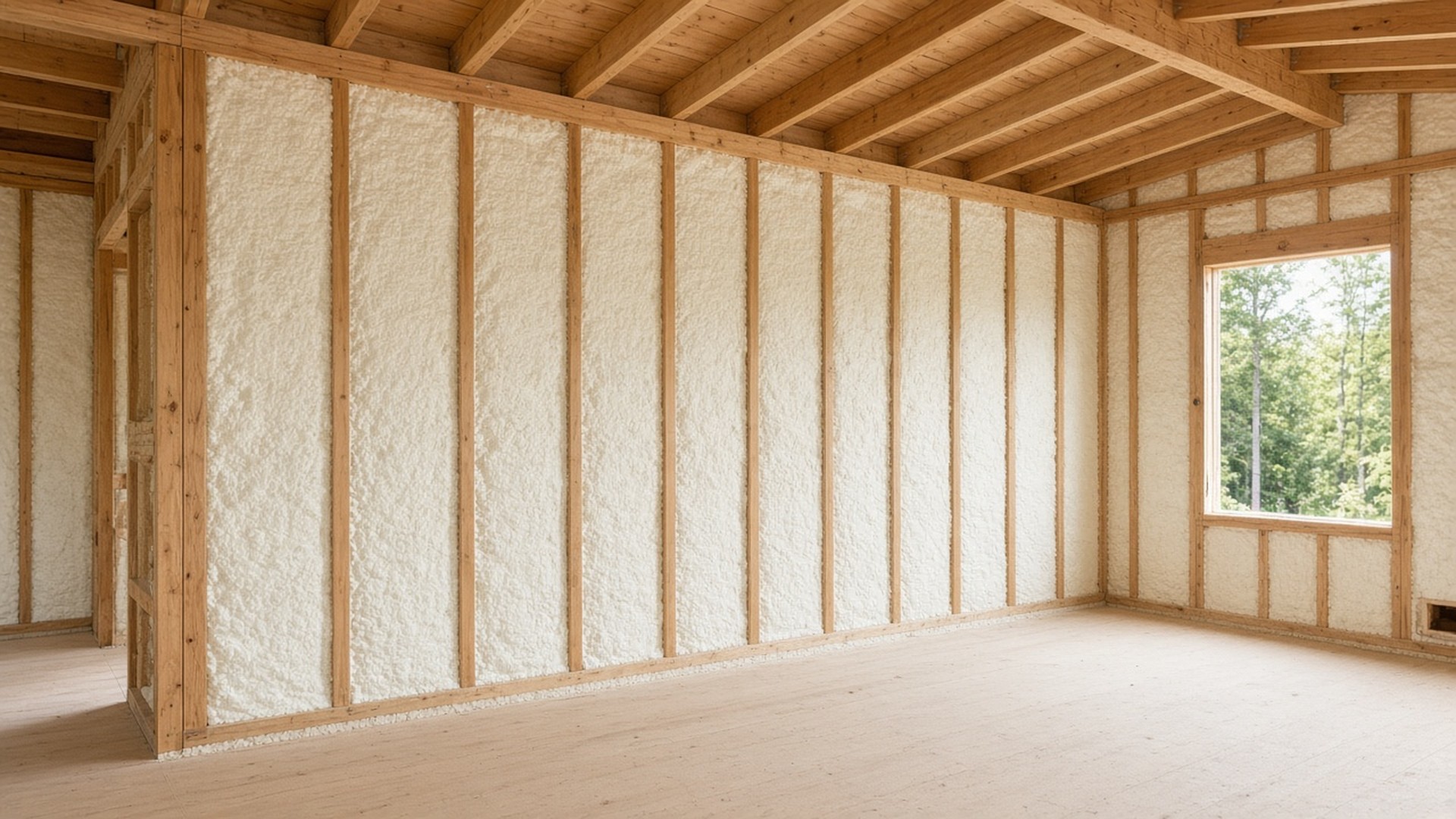
Open-cell foam (0.5 lb. density) has interconnected cells that allow air and vapor to pass through. It’s softer, less expensive, and excellent for sound attenuation. Closed-cell foam (2 lb. density) has sealed cells that trap blowing agent gas, making it rigid, waterproof, and a vapor retarder. Closed-cell achieves nearly double the R-value per inch of open-cell. For a full comparison, see our open cell vs. closed cell guide.
Which type of spray foam should I use in my attic?
It depends on your climate zone. In Climate Zones 1-4, open-cell foam at 5.5″+ is typically the code-compliant and cost-effective choice for unvented attic assemblies. In Climate Zones 5-8, closed-cell foam is generally required or recommended to provide vapor control and prevent condensation. See our complete attic insulation guide.
Installation
How long does it take for spray foam to cure?
Spray foam begins to firm up within seconds of application. It’s tack-free within 30-60 seconds and dimensionally stable within 1-5 minutes. However, full off-gassing and cure takes longer. Most manufacturers recommend ventilating for 24 hours and not occupying the space with a large application until off-gassing is complete. For large commercial projects, longer reoccupancy periods may be specified.
Do I need to cover spray foam with drywall?
In most habitable spaces, yes. Per the International Residential Code, spray foam plastic insulation must be covered with a thermal barrier (typically 1/2″ drywall) to protect it from fire. In attics or crawlspaces used only for storage, an ignition barrier may be acceptable. Some spray foam systems carry special listings for exposed use — your foam manufacturer and local building department can confirm requirements for your specific installation. See our Resources page for links to the relevant building codes.
Health & Safety
Is spray foam insulation safe after it cures?
Yes. Properly installed and fully cured spray foam is inert and does not emit harmful chemicals. The safety concern arises during installation and curing — sprayed foam releases isocyanate vapors and other chemicals that require proper PPE and ventilation. Once cured (24 hours for most applications), spray foam is chemically stable and safe for occupants.
What PPE is required when installing spray foam?
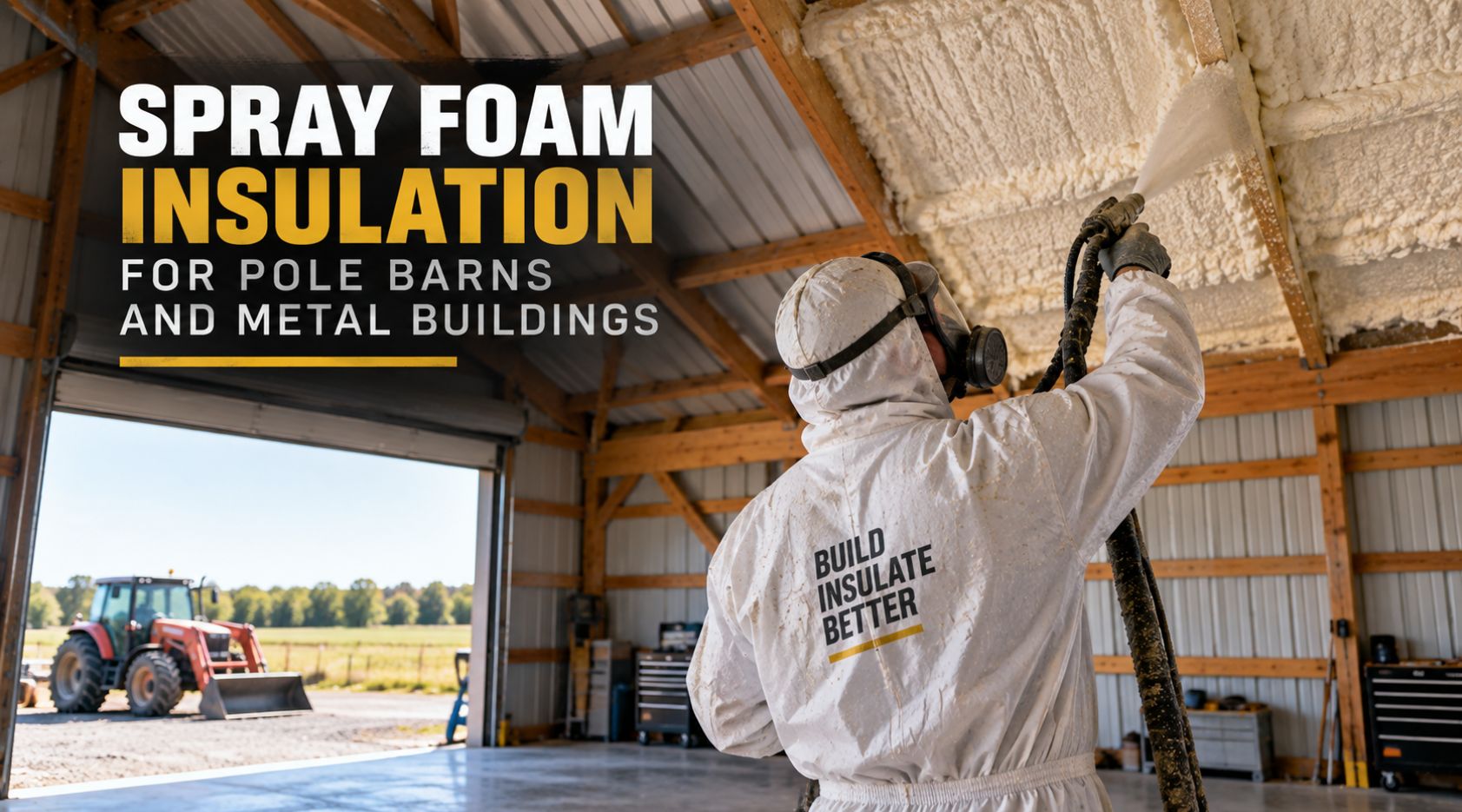
OSHA requires: supplied-air or organic vapor/P100 respirators (half-face minimum for small kits; full-face or supplied-air for professional rigs), chemical-resistant gloves (nitrile or latex), eye protection, and protective clothing covering all skin. Never install spray foam without proper respiratory protection. Isocyanates are respiratory sensitizers — once sensitized, even trace exposures can cause severe asthmatic reactions. See our PPE reference guide.
Hiring a Contractor
How do I find a qualified spray foam contractor?
Use our Find a Certified Applicator tool to locate contractors in your area with SPFA certification or other verified credentials. Also read our detailed guide on hiring a spray foam contractor — it includes 12 questions to ask every contractor before hiring and a list of red flags to watch for.
DIY Spray Foam
Can I install spray foam insulation myself?
DIY spray foam is feasible for small targeted applications like rim joists, crawlspace walls under 400 sq ft, and sealing penetrations. Two-component DIY kits like FROTH-PAK are widely available and capable for these jobs. For large applications (full walls, attics, rooflines), professional installation is strongly recommended. See our DIY kit reviews for help choosing the right product, and our rim joist guide for a complete step-by-step DIY walkthrough.
Still have questions? Our Community Forum has thousands of answered questions from real spray foam professionals and homeowners. You can also contact our editorial team directly — we answer every message. Or join our next live webinar and ask your questions in real time.