Closed-cell spray foam (also known as 2-pound foam) has a density of about 2 pounds per cubic foot and an R-value of 6 to 6.5 per inch. Because it is a denser material, closed-cell spray foam not only provides a vapor and water barrier to a home or structure but also adds additional structural strength. Closed-cell spray foam typically costs more than open-cell spray foam.
Because the cells in closed foam have their own structure and don’t share any structure with other cells, the foam has a higher plastic content and less air. The industry standard for spray foam to qualify as “closed cell” is that greater than 90% of the cells are closed.
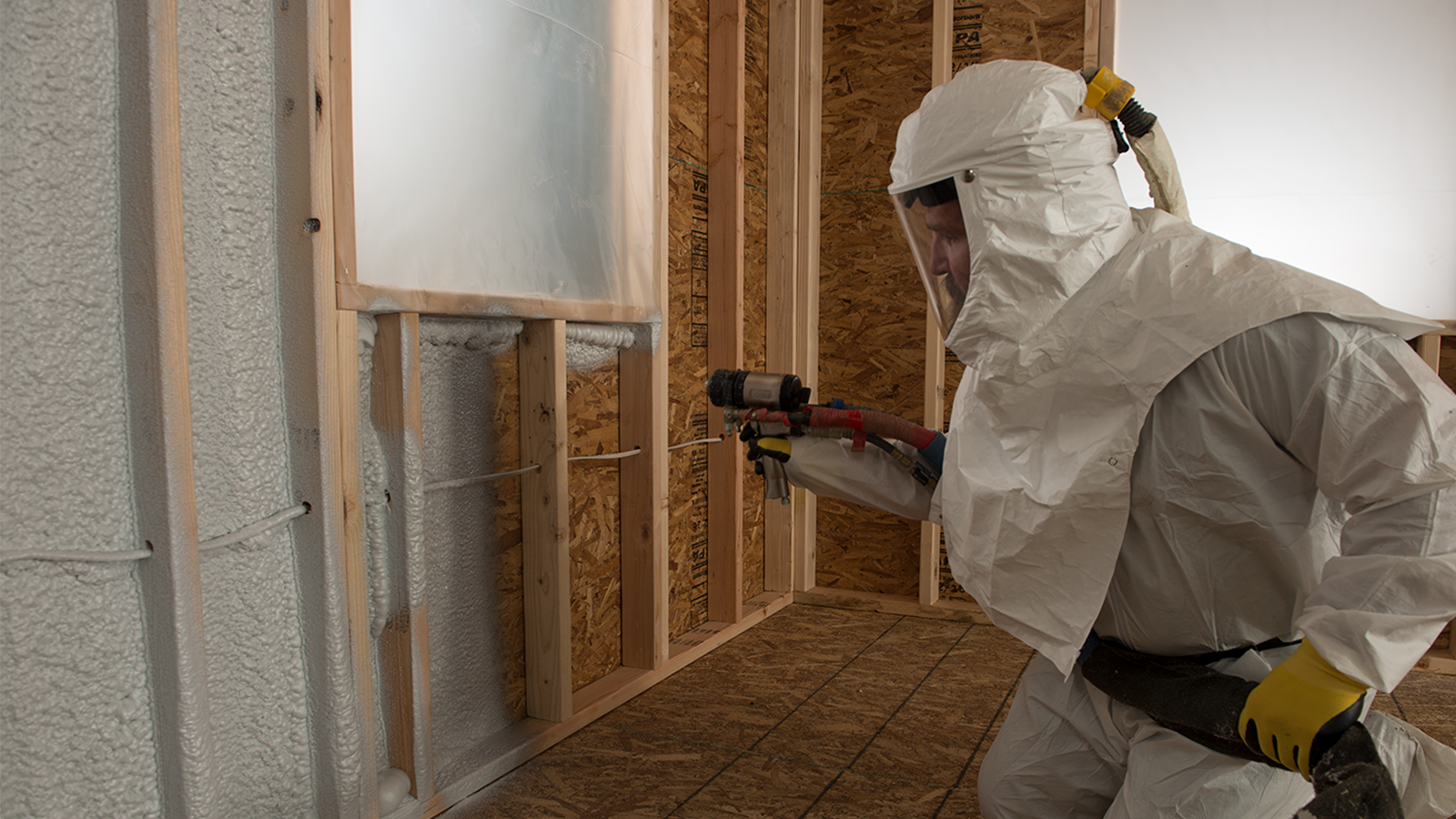
Advantages of Closed Cell Spray Foam

While open-cell and closed-cell foams are both polyurethane-based, the main difference between the two is that closed-cell foam is:
- Denser
- Two and a half inches of closed-cell foam have a permeance of 0.8 per m. Less water/air can pass through a closed-cell foam
- Heavier
- Because closed-cell foam is denser, it provides added wall/structural strength. One place that open-cell would be a better fit could be an attic or ceiling, due to weight.
- Provides better insulation and water barrier
- Although it is typically more material (and therefore more costly) than open-cell spray foam, closed-cell foam is less permeable and more water-resistant. This can prevent unwanted mold/moisture in hidden places.
Price Consideration
Although there are many advantages of having a closed spray foam insulation, the price is a drawback simply because more materials are needed to create the denser insulation. Closed-cell foam is more expensive per “R,” so one can expect an R-10 of closed-cell to be costlier than an R-10 of open-cell. There is more plastic used in closed-cell, and the chemicals used for a blowing agent in closed-cell foam is much more expensive than the water used in open-cell foam. However, there are benefits of increased effectiveness and strength.
Looking for a Spray Foam Supplier?
The specialists at ArmorThane are a good place to go if you are looking for a foam supplier.
Free · No obligation
Get spray foam quotes from a local pro
Tell us what you want insulated and where. We’ll connect you with a qualified spray foam contractor near you.

Diana Mills is the founder and editor of Foam Insulation Review. With over 15 years of experience in the building materials and spray foam industry, she has tested hundreds of products, interviewed leading contractors, and published in-depth guides for homeowners and professionals alike. Diana is passionate about helping people make smarter insulation decisions.